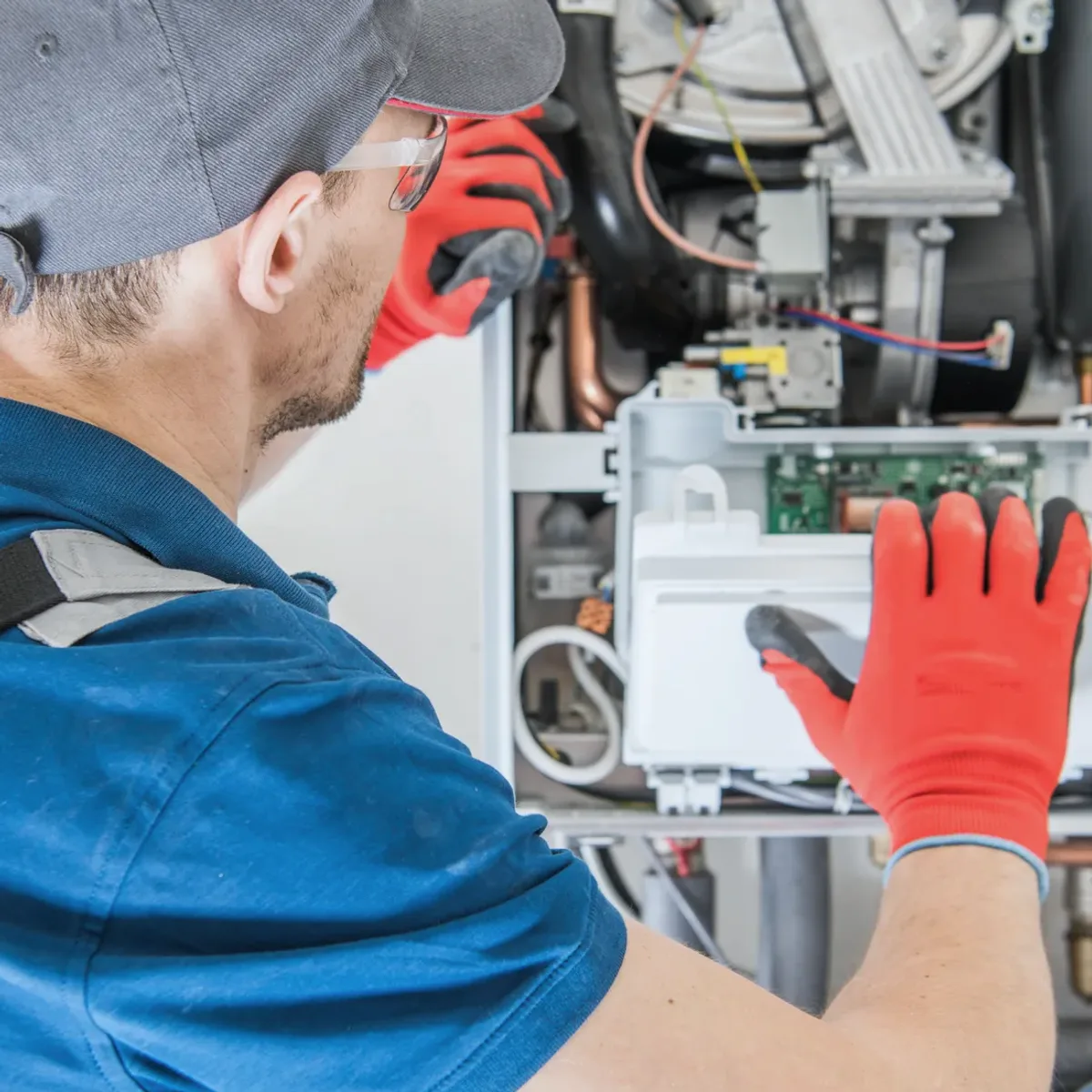
Request boiler service for a property in Seaforth. Include the equipment, the problem or planned work, and your location so the request can be reviewed.
How do boiler type, fuel, and radiator or in-floor distribution change the service assessment?
If a property uses a boiler, service depends on its fuel, combustion design, and hydronic distribution. A natural-draft cast-iron boiler serving radiators differs from a condensing boiler connected to in-floor loops, so model and system details shape diagnosis or replacement planning. No heat, cold radiators, leaks, or falling pressure can involve ignition, a circulator, an expansion tank, or another fault. Inspection findings determine whether repair, maintenance, or replacement is the appropriate decision.
Record the boiler model, fuel, venting type, distribution system, pressure changes, leak location, and which zones or radiators are affected. Service records can show whether a fault is recurring. Inspection can distinguish ignition or burner problems from circulator, expansion-tank, or pressure-related faults. These details matter because parts, venting requirements, and replacement design differ between natural-draft and condensing boilers and between radiators and in-floor loops.
Gas, propane, and oil boiler ignition, burner, and fuel-related faults
Circulator, expansion tank, pressure, radiator, and in-floor loop diagnosis
Natural-draft versus condensing boiler replacement and maintenance scope
Assessment and Scope
Questions for the Proposed Work
01
Trace no-heat, leak, or pressure symptoms
Cold radiators or an unresponsive zone can point toward a circulator or distribution issue, while a burner that does not establish operation raises a different ignition or fuel-system question. A dripping relief valve or repeated pressure loss requires investigation of the cause, which may involve the expansion tank or another hydronic component. Fuel and boiler design also shape the inspection. These distinctions help define a repair rather than replacing the whole boiler by default.
02
Match a replacement to the hydronic system
If the boiler is beyond practical repair, replacement planning should account for fuel availability at the property, venting arrangement, and the existing heat emitters. A natural-draft cast-iron unit serving radiators has different operating characteristics from a condensing boiler serving in-floor loops. The system's controls and water-temperature requirements also matter. Those findings guide equipment compatibility and installation scope; a boiler should not be selected from floor area or fuel type alone.
03
Base maintenance on the boiler and inspection
Maintenance should follow the manufacturer's instructions and the boiler's fuel, combustion design, and condition. Inspection may identify burner or ignition concerns, venting issues, corrosion, or hydronic components needing attention. A system flush is not automatic; whether water treatment or flushing is appropriate depends on the boiler and loop condition. Keeping service observations and repair history helps distinguish routine maintenance from a developing fault or a replacement decision.
Compare the next step
Identify who can report zone behaviour, provide access, and approve changes to the boiler or hydronic distribution. Ask how fault findings and proposed additional work will be communicated to the property decision-maker. Keep occupant comfort requests separate from authorization to alter piping, controls, or domestic hot-water equipment.
Leave fuel, combustion, electrical, and pressure-system work to a qualified contractor. Do not adjust safety devices or repeatedly add water to a system with an unexplained leak or pressure loss.