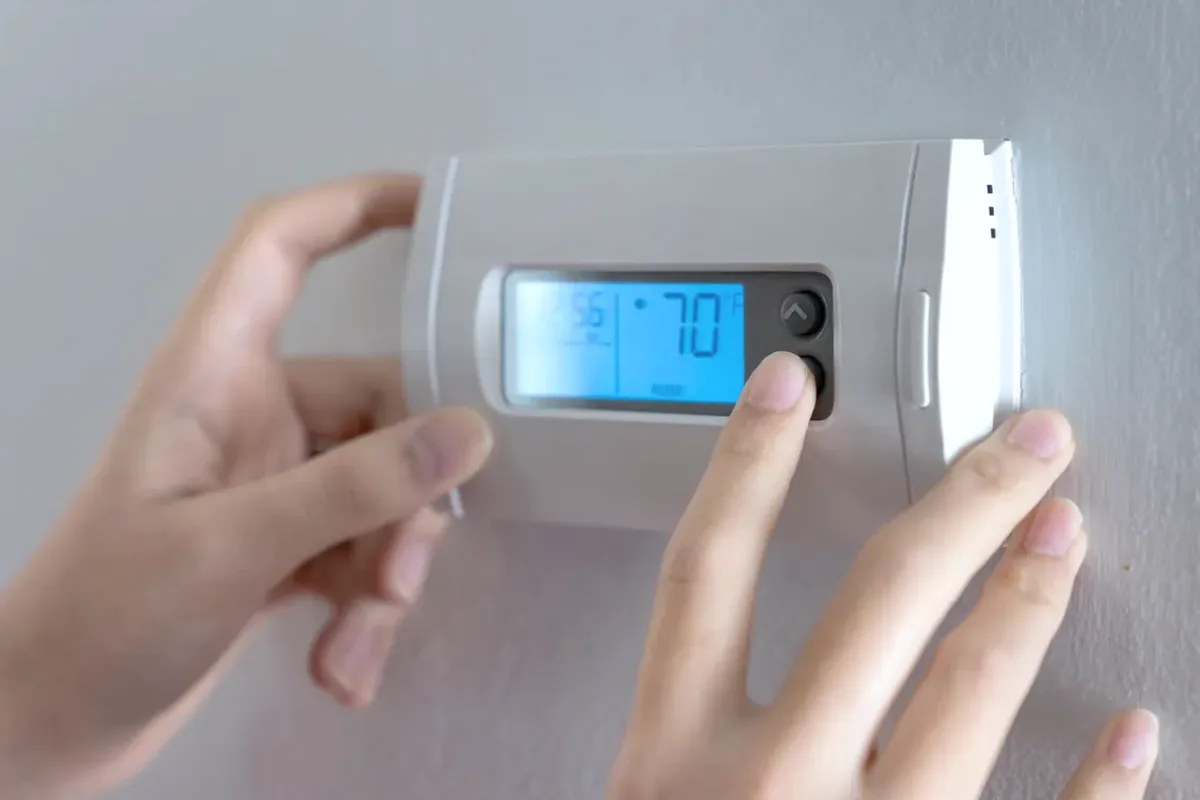
Request thermostat repair & replacement for a property in Seaforth. Include the equipment, the problem or planned work, and your location so the request can be reviewed.
How can thermostat compatibility be checked before replacing a control or adding smart features?
A blank display, inaccurate temperature reading, short cycling, or equipment that ignores a setting may originate at the thermostat or elsewhere in the connected system. Diagnosis considers power, wiring, sensors, relays, and the equipment's response before deciding whether repair or replacement is appropriate. A programmable or smart thermostat is not automatically compatible with every furnace or heat pump. The control's supported stages, wiring, and system functions should be checked so an upgrade matches the equipment rather than limiting its operation.
Record the thermostat model, connected equipment type, symptoms, display or error messages, and any recent wiring or system changes. Existing wiring and the equipment's control requirements help establish compatibility, including supported heating or cooling stages. Inspection can separate a failed thermostat component from a system-side fault. These findings matter because replacing the control alone may not correct the problem, and an incompatible upgrade may not operate the equipment as intended.
Thermostat display, sensor, wiring, relay, and short-cycle diagnosis
Programmable and smart control compatibility with system stages
Repair-versus-replacement decisions for connected HVAC controls
Assessment and Scope
Questions for the Proposed Work
01
Separate thermostat faults from equipment faults
A blank display, incorrect reading, or unresponsive control can involve its power supply, wiring, sensor, or an internal component such as a relay. Equipment that short cycles or ignores a setting may instead have a system-side control or operating fault. Testing the thermostat response alongside the connected furnace or heat pump helps locate the cause. That distinction matters because replacing a control will not resolve a fault elsewhere in the heating or cooling system.
02
Check compatibility before a smart upgrade
Before selecting a programmable or smart thermostat, compare its supported functions with the equipment and existing wiring. A furnace or heat pump may use multiple stages or specific control connections that a basic replacement does not support. Remote features also depend on the selected model and its requirements. Checking compatibility first helps define whether new wiring or a different control is needed, instead of assuming every thermostat can fully operate every system.
03
Choose repair or replacement from findings
A repair may be suitable when inspection identifies a correctable wiring, sensor, or component fault and the control remains compatible with the equipment. Replacement may make sense when the thermostat is damaged, obsolete, or unable to support the system's required functions. The decision should follow testing and compatibility checks, not age alone. If the equipment itself is not responding correctly, its fault should be diagnosed rather than attributed automatically to the thermostat.
Compare the next step
Agree on device ownership, remote-account access, and who may change schedules before installing the control. Ask how existing occupant needs and equipment settings will be preserved. At handover, provide the authorized person with operating instructions and establish how future account or access changes will be managed. Record any owner-approved limits on account permissions and who receives equipment alerts. Confirm that ordinary local operation remains available to the occupant under the agreed arrangement.
Thermostat wiring is not universal. Do not connect wires by colour alone or work on energized wiring; a compatible control must be configured for the equipment it serves.